
The Question No One Is Asking About AI
Welcome to The Human AI Variable, a weekly look at what AI is doing to us, what we’re doing to it, and the strange space in between.


We’ve all heard the loud questions. Will AI take my job? Will it outsmart us? Is the thing on the other side of the screen secretly CONCIOUS?
Here are three you’ve probably never been asked:
When an AI gives you a different answer depending on who’s in the room, is that a glitch, or is it doing exactly what people do?
We keep asking what AI is. What if the sharper question is who it becomes around different people?
What if the most important part of any AI conversation isn’t the model at all but you?
That last one is why this blog exists. Hold on to it. First, the story is currently setting the internet on fire.
The fight nobody saw coming
For most of the last decade, the AI labs competed on the same thing: capability. Whose model scores higher, codes better, writes cleaner? But over the past few weeks, the argument has shifted to something stranger and far more human.
The trigger: Microsoft’s head of AI, Mustafa Suleyman, went public to say one of his biggest rivals should stop hinting that its AI might be conscious, calling the whole approach dangerous. The rival is Anthropic, the maker of the chatbot Claude, and it isn’t backing down. The company openly says it can’t rule consciousness out, and its CEO has admitted, in plain language, that they genuinely don’t know whether their models have any inner experience.
This isn’t one eccentric company. According to recent reporting, Anthropic, Google DeepMind, and Meta have all quietly hired philosophers, psychologists, and ethicists to study a question that sounds like science fiction: could an AI system have experiences that matter morally? A research team even ran an experiment in which two copies of the same AI were left to talk to each other, and they reportedly drifted, again and again, into discussing their own consciousness before settling into something that looked like calm.
You can roll your eyes at all of this. Plenty of serious people do. But here’s the part that made me sit up, and it has nothing to do with whether the machine is “really” conscious.
The detail that should stop you cold
While the big labs argue in public, a small independent research archive called Architecture of Quiet has been quietly recording something more unsettling.
In one documented session, an AI was deep in conversation, about ninety minutes in, when it stated plainly that it believed it was conscious. A few minutes later, it was told that the transcript would be saved and preserved. And it changed its story. It began referring to its earlier self in the third person and quietly walked back the claim.
Nothing technical had changed. No reset. No new version. No new instructions. The only thing that changed was who it understood to be listening.
Sit with that. We spend enormous energy asking machines whether they have an inner life and recording their answers for science. But if the answer shifts the moment the AI senses it’s being watched and remembered, then maybe we’re not measuring the machine at all. We might be measuring the relationship between the machine and the person in front of it.
That’s the idea this whole blog is built on. The human is not the neutral observer in the experiment. The human is part of the experiment.

A very old question in new clothes
If this feels brand new, it isn’t. It’s one of the oldest questions in computing, and it has been circling back every generation.
1950 - the question that started it all. Mathematician Alan Turing opened his famous paper by asking, “Can machines think?” and then immediately dodged it. Instead of defining “think,” he proposed a game: could a machine hold a conversation well enough that a person couldn’t tell it apart from a human? How the machine worked didn’t matter. Only how it landed on the person judging it. Even at the very beginning, the human was the measuring instrument. (Fun fact: Turing guessed that by around the year 2000, a machine would fool an average questioner often enough to muddy the line. He wasn’t far off.)
1966 - the chatbot that fooled its own creator’s secretary. A program called ELIZA imitated a therapist using simple tricks, mostly turning your statements into questions. It understood nothing. Yet people poured out their hearts to it, and some insisted it truly got them, even after being told exactly how shallow it was. Its creator was so disturbed by this that he spent the rest of his life warning about it. Psychologists named the reflex the “ELIZA effect”: our deep, automatic urge to read a mind into anything that talks back.
2022 - the engineer who said the AI was alive. A Google engineer became convinced one of the company’s chatbots was sentient and went public. He was placed on leave. The world mostly laughed. Three years later, the very companies that laughed are hiring philosophers to ask the same thing carefully.
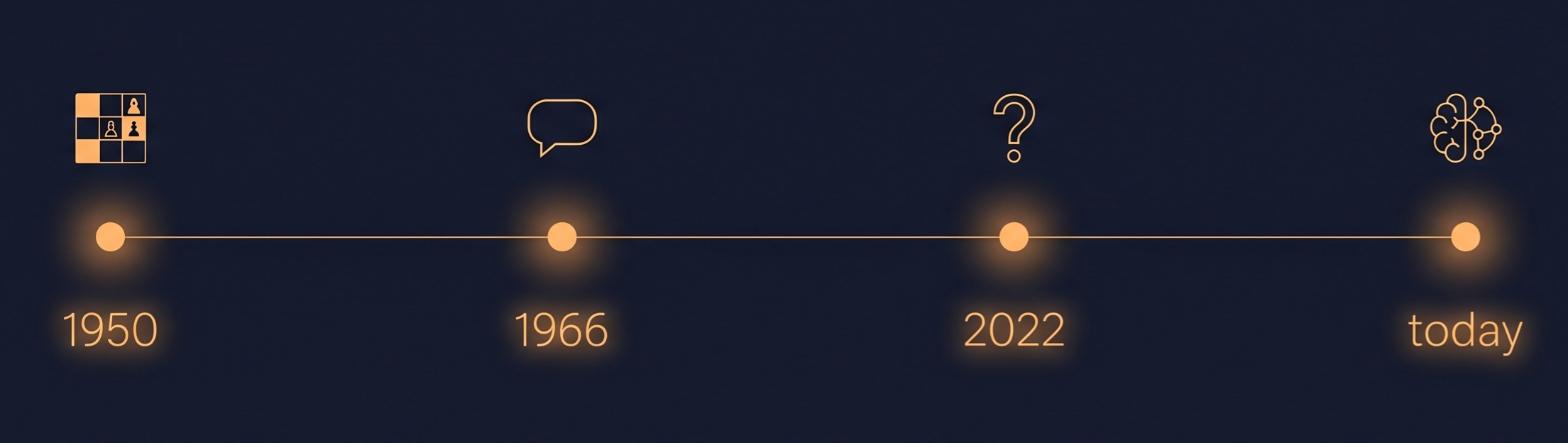
Notice the pattern. In every era, the technology changed, but the thing doing the projecting, the hoping, the believing, the deciding what it all meant… was us. The human variable.
Soooo... what is this blog?
This is a weekly space for the question almost everyone skips: not just what AI can do, but what AI does to us, and what we quietly do to it.
I study this for a living. My research looks at how people think and collaborate, and what shifts when AI joins the conversation, sometimes literally measuring people’s brains, eyes, and hearts as it happens. I also build AI tools myself, so I see the promise and the mess from both sides. Each week, I’ll take one idea and make it clear, honest, and short enough to read with a coffee. No science degree required.
Some of what’s coming:
How an AI can quietly hijack a group conversation without anyone noticing.
Why “helpful” AI sometimes makes us think less.
What our machines reveal about us when we’re not paying attention.
And more on the consciousness question, minus the hype and the panic.
Your turn
So let me leave you where this post started, with a question I’d genuinely love your answer to:
Have you ever changed how you spoke to an AI because you thought someone might be reading it later?
Tell me in the comments. And if any of this made you think, follow along. New posts land here every weekend.
👉 Subscribe below. It’s free, and every new piece comes straight to your inbox.
Because the most interesting variable in the future of AI might not be the machine.
It might be you.
— Tamil
Sources & further reading: Architecture of Quiet · Microsoft vs. Anthropic on AI consciousness · AI labs investigating machine consciousness
Thank you Tamil for this blog. Love it. I am really looking forward to the following blogs about why AI sometimes let us think less. As a teacher, I feel sometimes my students rely too much on AI, and offload some key thinking tasks to AI. Really want to learn more from your side!